

Do you have questions about inheritance in Spain? Rest assured, you are in the right place. In this article, we explain everything you need to know about inheritance in Spain.
Application of the European Regulation
Since the entry into force of the European Regulation, the law applicable to an inheritance is that of the Member State in which the deceased died, and this applies to all of their assets. Owing to the universal nature of the regulation, the applicable law may be that of a Member State (one of the 27 States of the European Union) or of a third State.
Example: if Mr X, a Belgian national, dies in Barcelona where he had been living for many years with his family, his estate will be governed by Spanish law.
However, the Regulation stipulates that any citizen may choose, during their lifetime, the law that will govern their succession. This choice may relate to the law of the country (or one of the countries) of which the person holds the nationality. In this case, the request must be made expressly, for example, through a will lodged with a notary in their country of nationality.
Example: a person living in Malaga, holding both Belgian and American nationality, will be able to choose between three laws to govern their succession: Spanish law if they do nothing, or Belgian or American law if they so specify.
Regulation in Spain
Spain has seven different regimes in inheritance law! These regimes apply to non-Spanish residents across every part of the country. In the absence of a will attesting to the deceased's choice to apply the law of their country of nationality, two sets of rules may govern the succession:
- the Spanish Civil Code for 11 autonomous communities : Andalusia, Asturias, the Canary Islands, Cantabria, Castile and León, Castile-La Mancha, Extremadura, the Community of Madrid, the Region of Murcia, La Rioja and the Valencian Community.
- the rules of foral law (derechos forales) or special law of the 6 other autonomous communities of the country that have powers in matters of civil law: Aragon, the Balearic Islands, Catalonia, Galicia, Navarre and the Basque Country.
Inheritance in Spain
There are two possible scenarios when it comes to inheritance on the Iberian Peninsula: succession with or without a will.
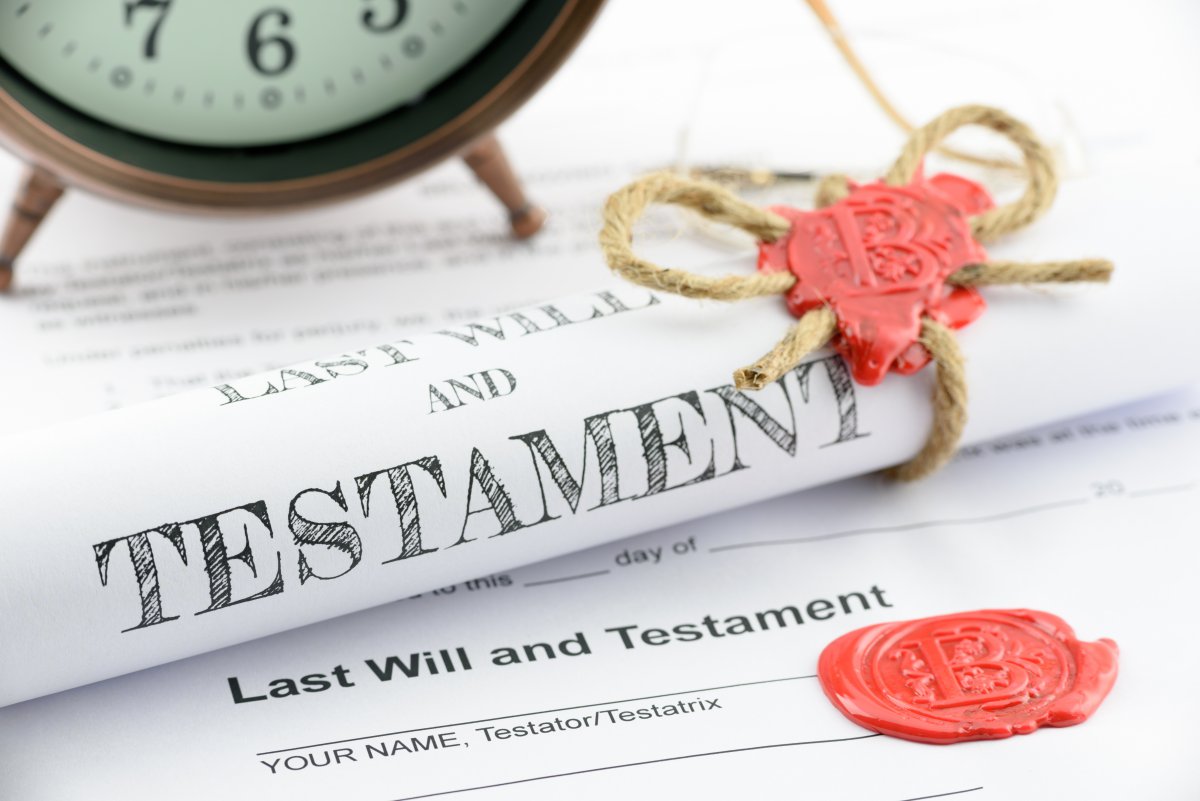
Succession with a will
In Spain, the will constitutes the official title to the inheritance. This document comes in several forms, but the most common is the authentic will (testamento abierto). The authentic will is drawn up by the notary in the language of the testator and in that of the notary, and is signed by both the testator and the notary. At Secundo, when the deed of purchase is signed, the majority of our clients have an authentic will drawn up by the notary. The cost of drawing up the will is included in the acquisition fees relating to the property purchased.
In Spain, the heirs (herederos) are, first and foremost, the children and descendants, known as forced heirs (herederos forzosos). In the absence of forced heirs, the heirs or legatees will be the persons designated in the deceased's will. If there is no will, the heirs are defined by the law in force according to their degree of kinship with the deceased. Finally, those designated in the will to receive part of the inheritance or a legacy (legado) are called legatees (legatarios).
Succession without a will
In the absence of a will, the heirs are defined by law according to their degree of kinship with the deceased. And it is the notary who is appointed to declare who the heirs are.
If no will has been drawn up, the general law establishes the legal order of heirs as follows:
- the descendants
- the ascendants
- the spouse
- relatives up to the fourth degree
- the State
Inheritance tax
Just as in Belgium, each of the heirs is required to pay inheritance tax, or death duties, in proportion to the assets allocated to them. In Spain, the deadline for paying the tax is six months from the date of death. However, a request for a further 6-month extension can be made within the first five months of the filing period.
The tax rate and the tax deductions vary depending on several situations, such as:
- whether or not you are a Spanish resident
- the community of residence of the deceased
- the place of residence of the heir
- the degree of kinship with the deceased
- etc.
Tax exemption for EU residents
In Spain, seven autonomous communities have adopted the near-abolition of inheritance tax for EU residents with a 99% allowance on this tax if the deceased was resident in one of these communities. The communities in question are the Community of Madrid, the Canary Islands, Cantabria, Extremadura, Murcia, La Rioja and Andalusia.
Example: Mr X, a Belgian national resident in Madrid, inherits the apartment of his Belgian parents who were resident in Madrid. He will pay only 1% inheritance tax. His brother, who lives in Namur, will also benefit from it. However, their sister, who lives in Berlin, will be subject to German inheritance tax in full, since she is not domiciled in Belgium, the country of origin of their parents.
In the event of inheriting a property, the notarial deed of acceptance of the inheritance must be signed and the inheritance duties paid. The deed must then be presented to the Land Registry where the property is registered, in order to register it in the name of the current owner, that is to say the heir.
Conclusion
When you decide to move to Spain and to acquire property there, the inheritance aspects should not be overlooked. The European regulation has clarified matters, but this is not without its questions. How do you wish to distribute your estate? How can you protect your spouse and your children? Spanish law differs from Belgian legislation on many points. Your notary will be able to advise you on the choices to make.
The subject is complex, and it is best to consider it in advance in order to plan for the applicable legislation. Finally, for more information on drawing up a will when the deed of purchase is signed, please do not hesitate to contact us via our online form.