

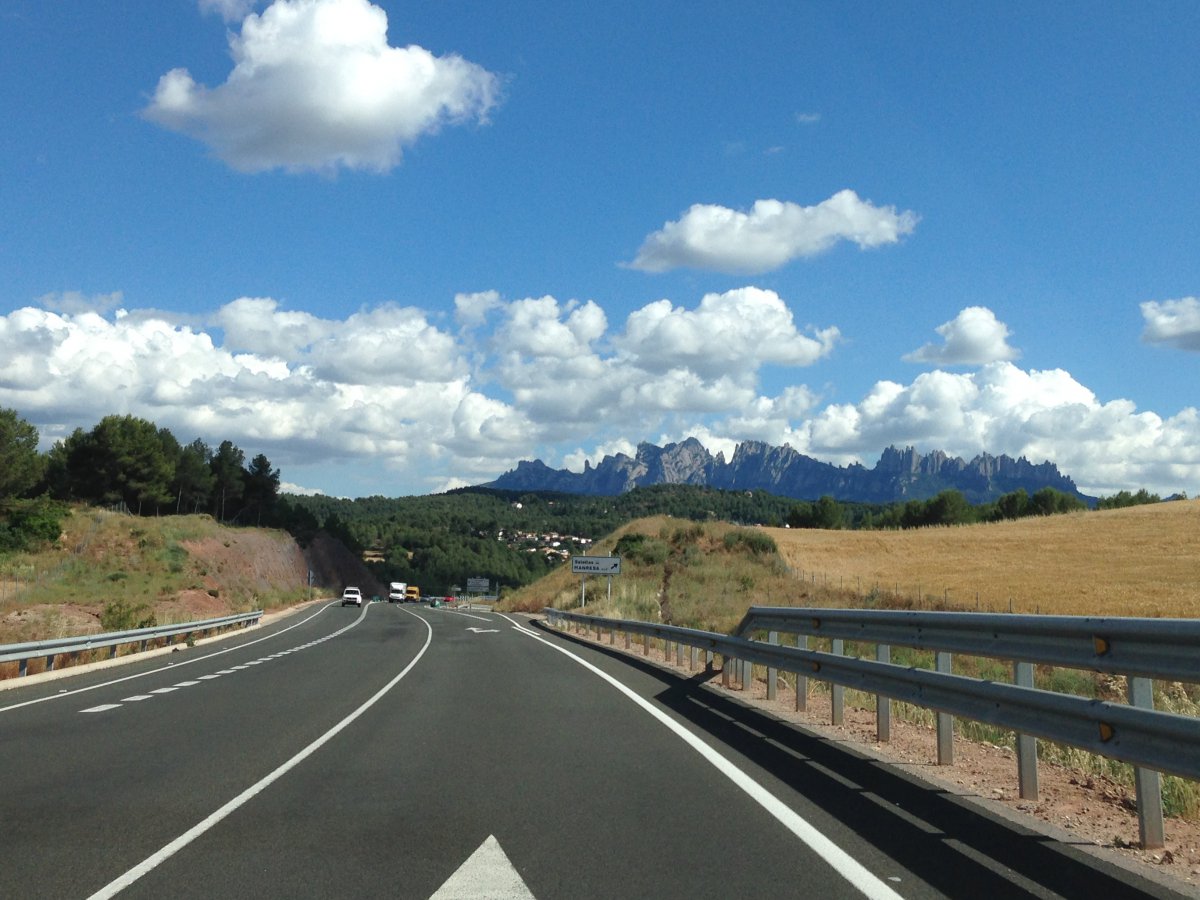
In addition to its network of national roads, Spain offers more than 7,500 km of motorways, including 2,000 km with tolls.
You want to use them to reach your second home, but you’re wondering whether there are specific rules to follow when driving in Spain? Discover everything you need to know in our article.
Do you need a Spanish driving licence?
As a national of a European Union country, you don’t need to take any steps to obtain a Spanish driving licence. You can use your national licence, as long as it is still valid.
To be able to drive in Spain, you must be at least 18 years old. If you wish to hire a car there, you must be at least 21 years old and, for some companies, hold a driving licence that is one or two years old.
If you prefer to travel there in your own vehicle, you only need your driving licence as well as a temporary vehicle circulation permit. The latter is issued at customs and remains valid for 6 months. Also make sure you are properly insured (your insurance in Belgium is also valid in the other EU member countries).
What safety rules must be respected?
If you wish to use the Spanish road network, you must comply with the rules that apply there. Overall, these are similar to the safety rules in force in Belgium :
- Your vehicle must be equipped with two warning or advance-warning triangles as well as a reflective safety vest;
- Speed limits must be respected, namely 120 km/h on Spanish expressways and motorways, 100 km/h on conventional roads, 90 km/h on the rest of the road network and 50 km/h in built-up areas;
- Overtaking must be carried out on the left;
- The permitted blood alcohol level may not exceed 0.5 g/l;
- It is prohibited to drive in Spain while talking on a mobile phone, except with a hands-free kit (be careful, however, as wearing an earpiece while driving remains prohibited);
- The seatbelt is mandatory, whether for the driver or the passengers;
- Wearing a helmet is also mandatory on motorcycles, bicycles and mopeds.
Beware, parking on the public highway is not always permitted or free. Many towns have paid and regulated parking zones. So make sure you enquire before leaving your vehicle.
Do you have a hazard-warning system such as Coyote? This is also permitted in Spain.
Are the roads toll roads?
Even though most of the Spanish road network is free, some motorway routes are, still today, subject to tolls. The Spanish government does, however, wish to make its entire motorway network free by 2020.
You can find out everything about tolls and the rates applied in Spain on this website. Toll payment can be made either in cash, by bank card or by electronic toll thanks to the Via-T system.
To check traffic conditions in real time, visit the website of the Directorate-General for Road Traffic.