

Did you know that, even though it is one and the same festival, Christmas is not celebrated in the same way everywhere in the world?
This is the case, for example, in Spain, where the Christmas and New Year celebrations run from 22 December to 6 January. No, you are not dreaming, they last much longer than they do here!
From the great lottery to the Three Kings, by way of Nochevieja, here is a closer look at the dates to remember for perfect festive celebrations with our southern cousins.
22 December
98% of the Spanish population takes part in the Sorteo Navideño, which has existed since 1812! That shows just how important this tradition is! It is worth noting that it is the biggest lottery in the world in terms of winnings.
The tickets are bought just about everywhere, at school, at work or even through associations, and the draw is broadcast on television on 22 December.
24 December
That evening is Nochebuena, in other words Christmas Eve. Here, as elsewhere, people gather with family or friends to enjoy a delicious dinner based on pork, lamb or seafood. Turkey is not the most common meat for the occasion. For dessert, you might savour the traditional turrón, some polvorones or some mazapán.
25 December
Who doesn't know this date?! Yes indeed, this is Christmas, known as Navidad in Spanish!
While here it is probably the most important day of the season, the Spanish celebrate it far more modestly.
To begin with, children do not receive their presents on this day, but families still gather for a good meal.
In Catalonia, there is the tradition of the Caga Tío, meaning “the uncle who defecates”, to put it politely!
It is a wooden log standing on two legs and decorated with a little barretina, the traditional red cap of the Catalans.
Custom has it that it is placed in the centre of the table on Christmas Day so that the children hit it while singing its song. In this way, it releases sweets, turrón and nuts.
28 December
El día de los Santos Inocentes is the day of jokes. This Catholic date aims to commemorate the children massacred by King Herod, whose story is told in the Bible.
To this end, anything goes, and people stick little white paper figures on each other's backs.
31 December
This date is Nochevieja, in other words New Year's Eve, which is generally celebrated with family.
An old tradition dating back to 1909 has it that you eat twelve grapes on the twelve strokes of midnight! These are “las doce uvas de la suerte”, which are said to bring luck for the year ahead.
5 January
As we mentioned earlier, children do not receive their presents on 25 December, but rather on 6 January, from the Three Kings.
So people celebrate their arrival the evening before with the Cabalgata, the parade of the Three Kings that the Spanish would not miss for anything in the world!
6 January
The day so eagerly awaited by children has arrived! The Three Kings passed through during the night and left presents beside everyone's shoes.
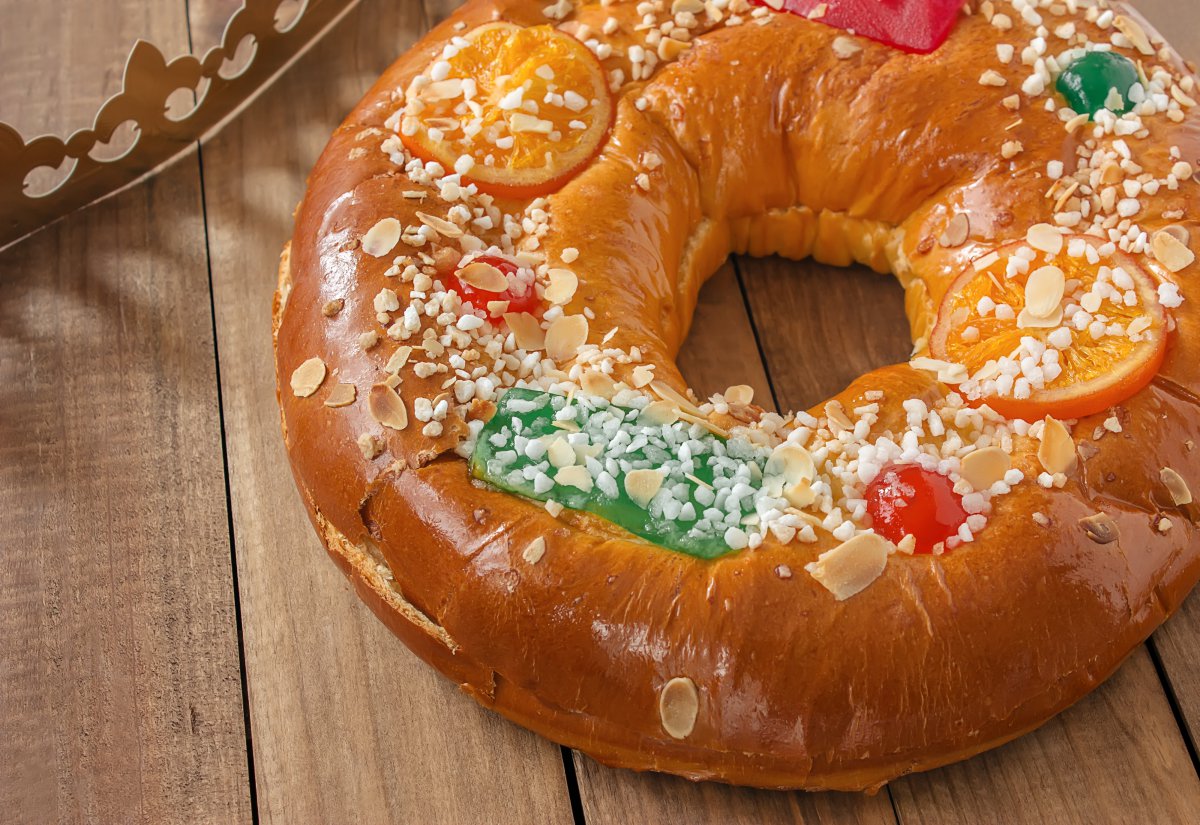
People make the most of the date to eat a roscón de reyes with the family, a crown-shaped cake covered with candied fruits to represent the jewels of the Three Kings.
Whoever finds the bean is the king or the queen.
On top of these various traditions, it is a real pleasure to stroll through the streets of Spanish towns at this time of year. Between the Christmas markets, the flower stalls, and especially poinsettias at this date, and the festive decorations, you won't know where to look first!
Do you fancy discovering Spain around these dates? There is still time to get in touch with us and talk through your project together!
Fill in our contact form without further delay and you will hear from us very soon!