

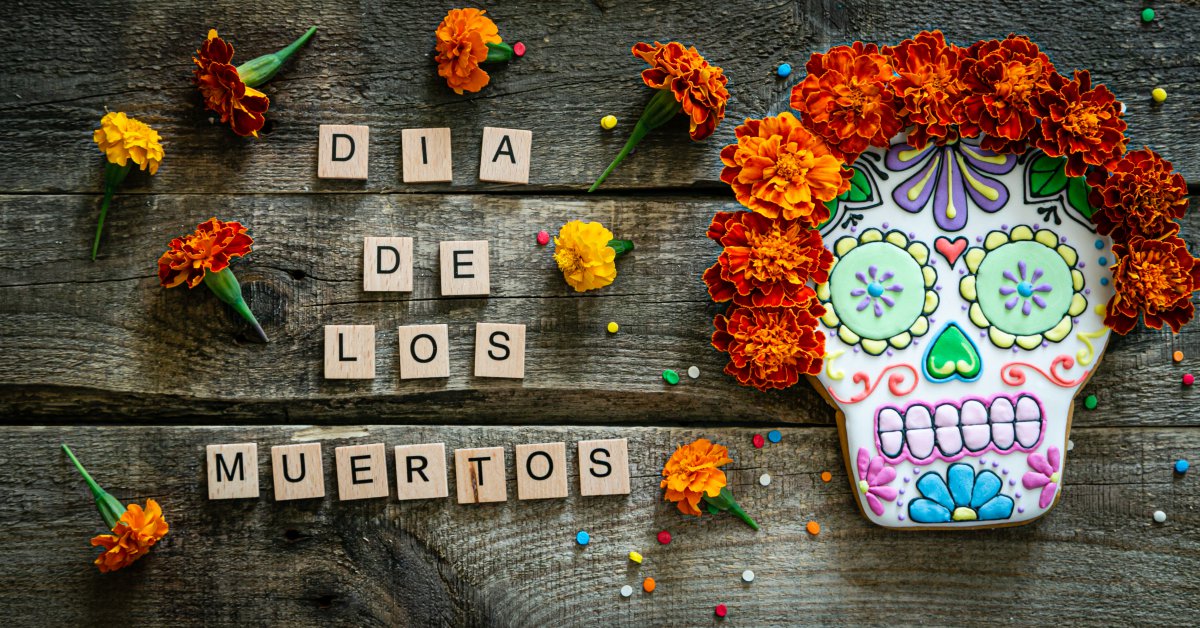
Vampires, witches, ghosts, the undead and pumpkins lie in wait for the arrival of Halloween, probably the most terrifying night of the year.
Driven forward by the United States, Halloween is celebrated all over the world, with every country having its own folklore traditions. How do the Spanish celebrate Halloween? A few answers in this new article. Mortals, will you dare to read what follows?
Visiting the cemeteries
This first tradition is without doubt the most classic of all and is fairly common in Belgium. On 1 November, the day of El Día de Todos los Santos, Spanish families head to the cemeteries to visit their departed. The graves are cleaned a few days beforehand so that everything is ready on the day itself. During this time of year, the cemeteries take on colour thanks to the vast array of flowers adorning the headstones.
Lighting the way for the departed
The tradition that follows is unique to Andalusia. On the night of 31 October, it is customary to fill a container with water, pour in some oil and add small floating wicks (one for each departed soul), a source of illumination producing a faint light. The aim of this gesture is to guide the souls in order to “light their way” and set them at ease for the passage to the hereafter. In addition, many families leave their candles at their windows.
Don Juan Tenorio
Don Juan Tenorio is THE emblematic character of the Halloween celebration in Spain, much like Jack O’Lantern in Celtic culture. A character created by Tirso de Molina, Don Juan de Tenorio brings life and the hereafter into harmony. On the night of All Saints' Day, he dares to venture alone into a cemetery in order to conjure up the souls of those who fell victim to his sword or to his desires.
On the night of All Saints' Day, Spanish theatres are packed with spectators, all having come to admire the work of Don Juan Tenorio. The play, which unfolds in a cemetery, has ever since been associated with the All Saints' Day celebration.
Trick or treat?
The All Saints' Day celebration in Spain brings its share of sweet treats, with a culinary tradition renowned for its pastries. Custom has it that grandmothers and their granddaughters take to the kitchen to cook up dishes each more exquisite than the last. Tradition dictates that, after the visit to the cemetery, families gather around the table to enjoy the typical products and eat the seasonal fruits. Quince paste, sweet chestnuts and marrons are also much sought-after products at this time of year. Here is a little tour of these Spanish delicacies:
- Buñuelos de viento : also known as “nun's farts”, buñuelos de viento are light, puffed and sweet fritters.
- Gachas : only 4 ingredients make up this age-old Spanish dish: flour, milk, honey and sugar. Its recipe is therefore very easy to make. Moreover, these porridges can be dusted with cinnamon and flavoured with aniseed, and are often served with croutons or small bread rolls. If you travel to Andalusia, you simply cannot miss the chance to taste them. In fact, we also encourage you to make them yourself. It's very easy and the result is astonishing!
- Pestiños : these are without any doubt the best-known pastries in Andalusia! With just 3 ingredients, these little marvels delight the Andalusians at All Saints' Day, but also at Easter.
- Huesos de Santo : these sugary bones are the emblematic pastry of All Saints' Day, if only for the name they bear. These little mouthfuls are made of almond paste and coated in syrup. These little treats come in different flavours such as chocolate and marmalade (jam).
- Roasted sweet potatoes : if there is one dish that appears on every Spanish table during the All Saints' Day celebrations, it is the sweet potato! Roasted in the oven, it is one of the typical dishes of this time of year. On 1 November, the inhabitants of the inland villages of Andalusia have the custom of going as a family to the cemetery, then having lunch together while remembering the departed through stories and anecdotes. This tradition is also accompanied by an array of confectionery and pastries specially prepared for the occasion.
We wish you all a frightfully happy Halloween!
And if you are planning to buy a property in Spain, let us know!